
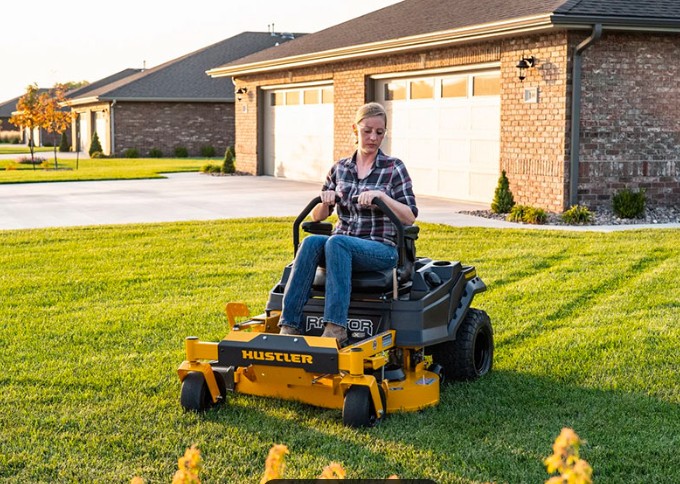
If mowing your block has started eating up most of your weekend, you’re definitely not alone. Plenty of Australians on bigger suburban lots and acreage reach the point where the push mower just isn’t cutting it anymore (pun very much intended). Let’s break down the different types of ride-on mowers, the best mower brands worth a look, and how to work out which one is the best fit for your property.
Is A Ride-On Mower Worth It?
The best ride-on mowers are the most expensive type of lawn mower, so it’s worth thinking carefully about whether you really need one. At a most basic level, they save you time and physical effort, and they tend to handle thick or heavy growth far better than a walk-behind.
However, they cost more up front and need regular servicing to stay reliable. On a small suburban lot, a ride-on is usually overkill if you are just doing simple gardening.
As a general rule of thumb, a ride-on starts to make sense once your lawn is around half an acre or more. On large rural properties, a reliable ride-on with a sensible maintenance plan can often work out cheaper than paying for a regular mowing service.
How The Different Types Of Ride-On Mowers Work
Not all ride-ons are built the same. The layout of the engine, deck and steering changes how a mower handles, what ground it suits and how much it costs.
Lawn Tractors
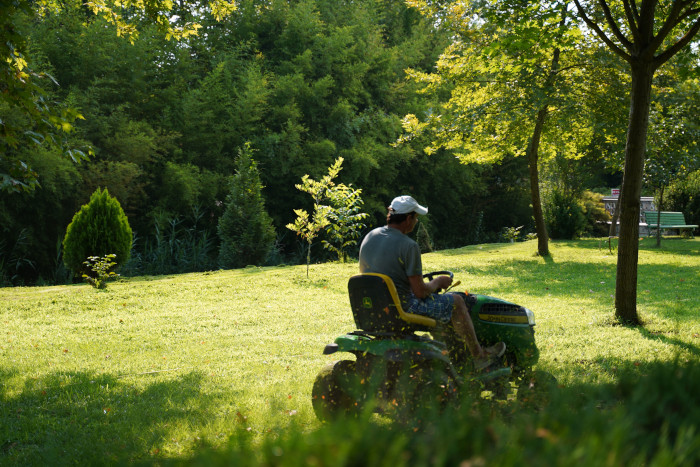
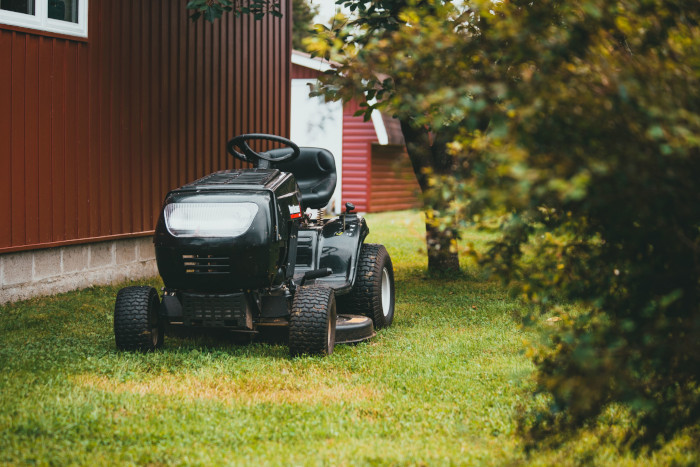
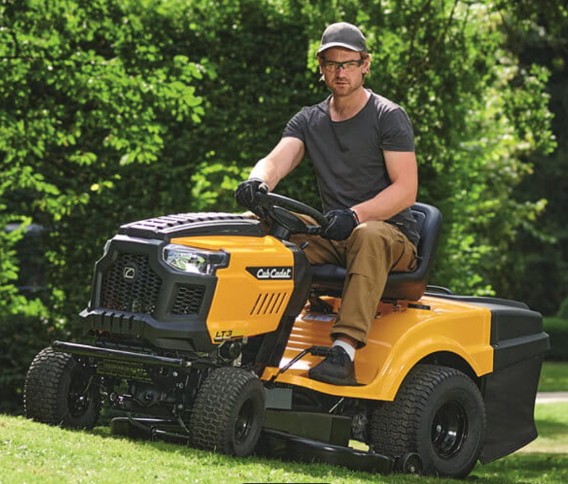
Lawn tractors have the engine at the front, a steering wheel and foot pedals, much like a small car. They’re a great all-rounder for large, open lawns and are often more budget-friendly than other types.
Keep in mind that they’re bulky. They’re harder to manoeuvre around trees and garden beds, and the long bonnet can make it harder to see what’s directly in front of you.
Compact Tractor
Garden tractors are heavier-duty machines built to do more than just mow. They usually have the power to tow a trailer and run attachments, so one machine can handle mowing, carting and other jobs around the property.
Rear Engine Ride-On Mowers
Rear engine ride-ons (often called mini riders) are the most basic and affordable option. They’re smaller, with narrower cutting decks and less power.
As a result, they usually need more passes to get through a larger lawn. However, many have a tight turning circle, which makes them handy on smaller blocks with a few obstacles.
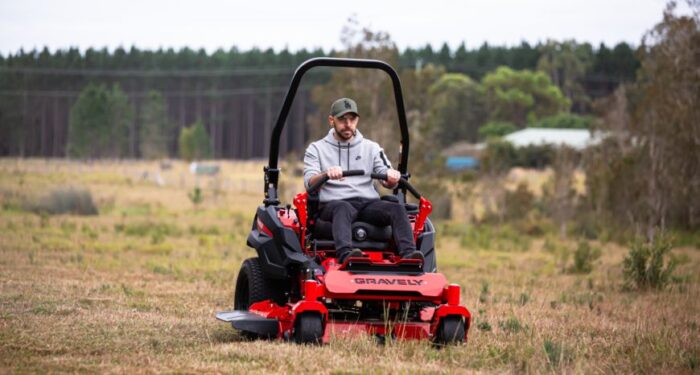
Zero-Turn Mowers
A zero-turn mower can turn on the spot. Each rear wheel has its own hydraulic drive, so the mower can pivot on its own axis without leaving uncut patches.
They tend to be fast, with wide decks and a low centre of gravity that gives good traction and an even cut. On the other hand, most use lap bars (two levers you push and pull to steer) instead of a steering wheel, which takes a little practice to get used to.
Front Mowers
Front mowers (also called riders or out-front mowers) have the cutting deck mounted in front of the wheels. This means they can reach under bushes, fences and outdoor benches where other mowers struggle.
Many use articulated steering (the machine bends in the middle) for a very tight turn, and all-wheel drive versions are pretty stable on uneven ground. Because the deck sits ahead of the tyres, the grass isn’t flattened before it’s cut.
Stand-On Mowers
Stand-on mowers combine the speed of a zero-turn with the precision of a walk-behind. The operator stands on a platform and can step off quickly to clear debris, which is why they’re mostly used by contractors.
In most cases, zero-turns lead on speed and manoeuvrability, garden tractors lead on versatility and rough ground, and lawn tractors sit somewhere in the middle at a lower price.
The Best Ride-On Mower Brands In Australia
A handful of brands consistently get strong feedback from Australian buyers: Cub Cadet, Toro, Rover, John Deere, Husqvarna and Kubota. Each has different strengths, so the best brand for you usually comes down to your block and what you need the mower to do.
Keep in mind that the prices below are a rough guide only and can change throughout the year.
Look At MowersHusqvarna
Husqvarna offers one of the widest ranges, covering lawn tractors, zero-turns and articulated front-deck Riders. Its Riders are particularly good at trimming around obstacles, and all-wheel drive versions handle slippery or steep ground well.
It also offers a battery-powered Rider that covers over 5,000 square metres per charge.
Popular models:
- TS 142T: 42-inch lawn tractor with a V-twin engine and pedal-operated hydrostatic drive, suits small to mid-size yards, around $4,500 to $5,900
- TS 242TXD: 42-inch fabricated deck and Kawasaki engine, around $6,800 to $7,700
- Z146: 46-inch zero-turn with a 726cc Kawasaki V-twin and high-back seat, around $7,000 to $8,000
- R 316TsX AWD: all-wheel drive Rider for tougher jobs and year-round use, around $15,500
- R 200iX / R 200iX AWD: battery-powered Riders, around $10,600 for the 2WD and $11,000 for the AWD
Cub Cadet
Cub Cadet has a reputation for strong, durable machines built for tough mowing conditions. Its Enduro Series lawn tractors use an automotive-style E-Coat paint finish for corrosion protection, and its domestic ride-ons come with up to a 6-year warranty.
The standout feature is Synchro Steer, used on its steering-wheel zero-turns. Like any zero-turn, the rear wheels drive independently for a tight turn. However, the front wheels also grip and steer rather than swivelling freely, which gives safer, more predictable handling on slopes.
Popular models:
- Mini Rider CC 30 HX: compact 30-inch rider for smaller yards, around $4,200 to $4,500
- Enduro XT1 18/42: 42-inch deck, 18hp Kawasaki V-Twin and cruise control, suits blocks up to 4 acres, around $5,700 to $6,000
- Enduro XT2 LX 42 EFI: 42-inch fabricated deck, fuel-injected engine and diff lock, around $7,000
- Ultima ZTS1: Synchro Steer zero-turn for large residential blocks and small acreage with slopes
- Z-Force SX 48: steering-wheel zero-turn known for holding its line on hills
- CC 30 E: battery-electric rider that mows up to about 1 acre per charge
Toro
Toro is well known for innovation and cutting quality. Its MyRIDE suspension system smooths out bumps on uneven ground, which can make a real difference to fatigue on a long mow.
The TimeCutter zero-turn range is especially popular for its agility around trees and tight corners.
Popular models:
- TimeCutter MX4225: 22hp Kohler engine and 42-inch fabricated deck, up to 5 acres, around $7,800
- TimeCutter MX4275 MyRIDE: 24.5hp V-Twin with a suspension seat platform, up to 4 acres
- TimeCutter MX5400: 54-inch deck for larger acreage, around $11,000
- eS3000: compact 30-inch battery rider for smaller blocks, around $5,000
Rover
Rover is an Australian brand with a long history, and its ride-ons are designed and tested with local conditions in mind. They’re built to handle thick grass and rough ground, with a range of cutting widths and adjustable cutting heights.
Rover zero-turns come with either lap bars or four-wheel steering, and Rover-engined models usually carry a 5-year domestic warranty.
Popular models:
- Rancher 36 Autodrive: 36-inch deck and foot-pedal drive for small to medium lawns, around $3,900
- Lawn King 18/42: 18hp V-Twin and 42-inch deck, blocks up to 3 acres, around $5,100 to $5,400
- Lawn King I-547/42: 42-inch deck with anti-scalp rollers, around $5,000
- RZT S 46: steering-wheel zero-turn suited to sloping blocks
John Deere
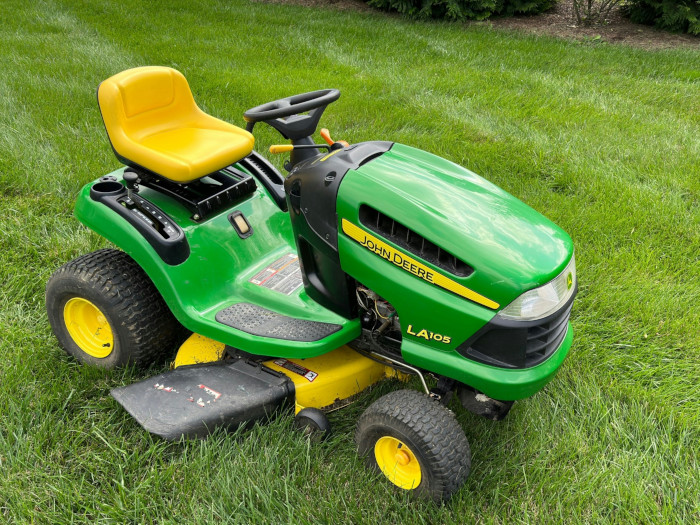
John Deere is known for powerful, reliable engines, sturdy builds, comfortable high-back seats and excellent parts and dealer support. Its range is split into series, so it’s pretty easy to step up as your needs grow.
- 100 Series: affordable, comfortable entry range with 42 to 48-inch decks
- X300 Select Series: compact and manoeuvrable, suits up to about 3.5 acres of varied ground
- X500 Select Series: more power and durability for heavier workloads
- X700 Signature Series: heavy-duty tractors with four-wheel steering, for up to around 7 acres of challenging ground
- ZTrak residential zero-turns: decks from about 42 to 62 inches
Kubota, Hustler And Other Commercial Brands
For large acreage or commercial use, Kubota’s ZD Series diesel zero-turns are among the highest-rated machines on the market. Hustler’s Raptor XD 48 is aimed at homeowners with up to five acres, while the AS-Motor Sherpa 4WD is a heavy-duty all-terrain option for rough, sloping land.
How Do The Major Brands Compare?
So which brand comes out on top?
In most cases, it depends on what matters most to you and your block.
When it comes to handling slopes, Cub Cadet takes the win. Its Synchro Steer zero-turns tend to hold a side slope far better than lap-bar models, and the long warranty adds peace of mind.
For ride comfort, Toro is hard to beat. The MyRIDE suspension makes a noticeable difference on bumpy ground, especially if you’re mowing for an hour or more at a time.
For value for money, Rover is usually the pick. Its lawn tractors generally come in a little cheaper than comparable models while still being built for Australian conditions.
When it comes to build quality and after-sales support, John Deere takes the win. However, you’ll generally pay more for it up front.
It should also be noted that the best brand on paper isn’t much use if you can’t get parts for it. Wherever you live, it’s worth choosing a brand your local dealer stocks and services.
How To Choose The Right Ride-On Mower
The best place to start is with three simple questions: how much lawn do you actually need to mow, what kind of ground is it, and what’s your budget? Once you’ve got those answers, the factors below will help narrow things down.
What Size Ride-On Mower Do You Need?
Keep in mind that your property size isn’t the same as your mowing area. A five-acre block might only have an acre of maintained lawn, with the rest left as paddock or bush.
Cutting decks range from about 30 inches up to 72 inches on large commercial machines. Wider decks cut more per pass, but they cost more and are harder to manoeuvre.
As a rough guide:
- Under half an acre: a ride-on usually isn’t needed, but a compact 30-inch rider works if you want one
- Half an acre to 1 acre: 30 to 42-inch deck
- 1 to 2 acres: 38 to 42-inch deck
- 2 to 5 acres: 42 to 54-inch deck
- 5 acres or more with few obstacles: 50-inch deck or wider
A wide deck suits big, open areas, while a 40 to 42-inch deck is much easier to steer around trees, sheds and garden beds.
How Much Horsepower Do You Need?
More horsepower generally means faster cutting and better performance in thick grass and on hills. Torque (the engine’s pulling power) matters too, especially when the mower is working hard in tall or wet grass.
- Around 18hp: small to medium lawns that are mostly flat
- Around 21.5hp: medium-sized blocks and varied ground
- 27 to 38hp: larger lawns and steeper slopes
Engine Type And Position
Single-cylinder engines are simpler and cheaper, but they tend to be less powerful and less durable. V-Twin engines (two cylinders arranged in a V shape) run more smoothly with less vibration, and they usually cope better with slopes and towing.
Engine position matters as well. Rear-engine mowers are generally less powerful, so a 16 to 20hp rear-engine rider suits around one acre. For anything bigger, a front-engine lawn tractor or a zero-turn is usually the better choice.
Transmission
Most ride-ons use a hydrostatic transmission (an automatic drive that uses fluid instead of gears). This gives you smooth, variable speed control with a simple foot pedal, and it needs very little maintenance.
Manual transmissions use preset gears, a bit like a car. They’re cheaper, but they take longer to get used to and aren’t as easy to adjust on the move.
Slopes And Uneven Ground
If your block is hilly or uneven, look for a low centre of gravity, a wide stance, good traction and a differential lock (which stops one wheel spinning when it loses grip). All-wheel drive is worth it if parts of your lawn are steep, slippery or mowed through the wet months.
It should also be noted that lap-bar zero-turns don’t hold side slopes well, because the front wheels swivel freely. A steering-wheel zero-turn or a lawn tractor is usually the safer choice on a sloping block.
Whichever you choose, make sure you check the maximum slope rating for that model.
View ProductsCutting Height And Grass Disposal
Most ride-ons have adjustable cutting heights, usually from around 25 to 38mm at the lowest setting up to about 100mm or more. It’s also worth thinking about what happens to the clippings:
- Mulching: chops clippings finely and returns them to the lawn as nutrients, best for lawns mowed often
- Catching: collects clippings in a catcher, with bigger lawns needing bigger catchers
- Side or rear discharge: throws clippings back onto the lawn, suits taller, coarser grass but may mean raking afterwards
Petrol vs Battery Ride-On Mowers
Battery ride-ons are quiet, emission-free while mowing and need very little maintenance. Most current models cover around 1 to 2 acres per charge, with a recharge time of roughly 4 hours.
However, petrol is still the better choice for large or rough acreage, where longer run times and extra power make a real difference.
Comfort And Ease Of Use
If you’re going to be sitting on a mower for an hour or more, comfort matters. Look for a cushioned, adjustable high-back seat, a steering wheel you can reach comfortably, and pedals and controls that don’t make you stretch.
Features like suspension seats, cruise control and armrests can reduce fatigue too. The best thing to do is sit on a few machines in person before you buy.
Attachments, Fuel Tank And Storage
Attachments like trailers, sprayers, spreaders and sweepers can turn a ride-on into a multi-purpose machine around the property. A larger fuel tank also means fewer refuelling stops on bigger blocks.
Keep in mind that bigger decks mean wider, bulkier machines. Measure your shed and gateways before you buy, because the mower’s overall width is usually wider than its cutting width.
Mowing In Australian Conditions
Australian conditions can be pretty tough on a ride-on mower. Hot summers, heavy downpours and fast growth after rain mean the grass can go from neat to knee-high in a matter of weeks.
As such, it’s worth choosing a mower with enough power and deck capacity to handle thick, wet growth, not just a neatly kept lawn. Dust and dried clippings also build up quickly, so a deck wash port and an easy-to-clean design can save you plenty of hassle.
On rural and semi-rural properties, parts and servicing matter just as much as the mower itself. A machine that sits in the shed for weeks waiting on a part from interstate isn’t much help in the middle of the growing season.
Buying from a dealer that stocks parts and services what it sells is the simplest way to avoid that.
How Much Does A Ride-On Mower Cost In Australia?
Ride-on mower prices vary a lot depending on the type, size and brand. As a rough guide:
- Budget and compact rear-engine riders: $3,000 to $4,500
- 42-inch domestic lawn tractors: $4,500 to $7,000
- Domestic zero-turns (42 to 48-inch): $6,000 to $10,500
- Battery ride-ons: $5,000 to $12,500
- Large acreage zero-turns (54 to 60-inch): $10,000 to $17,500
- Commercial zero-turns and front mowers: $15,000 to $30,000 or more
In most cases, homeowners spend somewhere around $4,000 to $7,000 for a reliable 42-inch machine. Keep in mind that annual servicing should also be part of your budget.
If you’re looking to spread the cost, Lockyer Farm Machinery can talk you through finance options and trade-ins.
Your Ride-On Mower Buying Checklist
So you’ve narrowed it down to a few models. What next?
Before you hand over any money, make sure you also have:
- A rough measurement of your actual mowing area, not just your block size
- A clear idea of any slopes and the slope rating you’ll need
- Gate and shed measurements, so the mower fits where it needs to go
- Somewhere sheltered to store it
- A local dealer who can service it and supply parts
- Room in your budget for annual servicing
- Safety gear, including sturdy footwear and eye and hearing protection
- A way to transport it, if you’ll ever need to move it between properties
Where Should You Buy A Ride-On Mower?
Ride-ons are sold through local dealers, big box retailers, online marketplaces and second-hand sellers. Big box stores and online sellers can sometimes be cheaper, but they usually offer limited setup and after-sales support.
A local dealer, on the other hand, can usually offer demos, proper setup, servicing and genuine parts. For a machine you could own for 10 years or more, that support tends to be well worth it.
Should You Buy A Second-Hand Ride-On Mower?
Buying used can save you a lot of money. However, it does come with a higher risk of maintenance problems, so it’s worth doing your homework first.
Pros:
- Lower price: you can often get a better-spec machine for the same budget
- Less depreciation: the steepest drop in value has usually already happened
Cons:
- Unknown history: you may not know how well it’s been maintained
- Higher maintenance risk: worn belts, blades and bearings can add up quickly
- Limited warranty: private sales usually come with little or no cover
Before buying, research the make and model and check for recalls on the Product Safety Australia recalls site. Always ask for a test drive, and inspect the wheels, deck, blades, engine, belts, wiring, brakes and fuel tank. Avoid buying on the spot and read product reviews.
The ACCC also recommends having an authorised dealer check that the safety equipment on any second-hand mower is working properly. Lockyer Farm Machinery stocks used ride-ons that have already been inspected and serviced, which takes a lot of the guesswork out of it.
Ride-On Mower Safety Tips
It should go without saying that a ride-on lawn mower is a serious piece of machinery. According to Product Safety Australia, there have been hundreds of ride-on mower injuries across the country and an average of around two deaths a year.
The biggest risks are the rider falling off and being run over or trapped under the mower, and children nearby being hit. There’s no mandatory safety standard for ride-ons in Australia, so the ACCC recommends choosing a mower built to the voluntary ISO 5395-3 standard that stops the blades when reversing.
To stay safe:
- Read the manual, including your model’s maximum slope rating
- Check for loose bolts, worn belts and damaged blades before each use
- Clear sticks, rocks and toys from the area first
- Wear sturdy footwear, long pants, and eye and hearing protection
- Drive slowly, especially when turning, and avoid wet grass
- Never mow across steep slopes or go downhill in neutral
- Keep children and pets well clear, and never carry passengers
- Don’t let anyone under 16 operate a ride-on
- Disengage the blades before getting off, and never override the seat safety switch
- Keep the rollover protection up and wear the seatbelt, if your mower has them
- Remove the key after use
If something doesn’t feel right with the brakes, steering or safety switches, the best thing to do is stop using the mower and have it checked by a qualified technician.
Maintenance Tips To Keep Your Mower Running
With proper care, a ride-on mower typically lasts 10 to 15 years. However, that depends heavily on how well it’s looked after.
After Each Use
- Clean off clippings and debris, using the deck wash port if your mower has one
- Check and top up the oil
- Inspect the blades for damage
Every Month
- Check tyre pressures for an even cut
- Grease the steering and suspension points
- Inspect the belts and replace them if worn
Every Year
- Change the oil, air filter and spark plug
- Sharpen or replace the blades
- Book in a professional service
When cleaning, keep water away from electrical parts and bearings. Follow the manufacturer’s service intervals too, as many mowers have an hour meter to help you keep track.
Zero-Turn Vs Lawn Tractor: Which Is Better?
For most buyers, the decision comes down to these two types. Here’s how they stack up.
Zero-Turn Mowers
Pros:
- Speed: wide decks and fast ground speeds get big jobs done quickly
- Manoeuvrability: turns on the spot around trees and garden beds
- Cut quality: tight turns mean fewer missed patches
Cons:
- Price: generally more expensive than a lawn tractor of the same size
- Slopes: lap-bar models don’t hold side slopes well
- Learning curve: lap-bar steering takes some getting used to
Lawn Tractors
Pros:
- Price: usually the most affordable way into a quality ride-on
- Familiar controls: a steering wheel and pedals feel just like driving
- Stability: generally steadier on side slopes than lap-bar zero-turns
- Versatility: many can tow trailers and run attachments
Cons:
- Turning circle: harder to manoeuvre around obstacles
- Speed: slower on large areas
- Visibility: the long bonnet can block your view of what’s directly ahead
When it comes to speed on flat, cluttered ground, zero-turns take the win. When it comes to value and stability on gentle slopes, lawn tractors come out on top.
So which should you choose? If you’re on half an acre to 3 acres of mostly open, fairly flat ground, a 42-inch hydrostatic lawn tractor is usually the best value. If, however, your block is sloping or full of trees and garden beds, a steering-wheel zero-turn tends to be the faster and safer option. And if you’re looking after large acreage or mowing commercially, a 50-inch-plus zero-turn or front mower is generally the way to go.
Find The Right Ride-On Mower At Lockyer Farm Machinery
Choosing a ride-on mower comes down to your mowing area, your terrain and how much you want to spend. The right machine can save you hours every month, while the wrong one can be frustrating or even unsafe on your block.
It’s not always easy to work out the best fit on your own, especially with so many brands, information and types to compare. If you’re still not sure which ride-on suits your property, give us a call on 07 5462 1888 or get in touch with the team at Lockyer Farm Machinery!
We can help you compare new and used ride-on mowers and point you in the right direction.

Frequently Asked Questions
Which Ride-On Mower Brand Is The Most Reliable?
Cub Cadet, John Deere and Kubota are consistently rated highly for engine reliability and durability in Australia. Just as importantly, choose a brand your local dealer stocks and services, so parts and repairs are easy to get.
Is John Deere Or Husqvarna Ride On Mowers Better?
Both are quality brands. John Deere tends to excel with comfortable, well-supported lawn tractors, while Husqvarna ride on mowers offers a wider range, including front-deck Riders that are great for trimming around obstacles.
Are Ride-On Mowers Worth It?
Yes! For lawns of around half an acre or more, a ride-on saves a lot of time and effort, and on large rural blocks it can even work out cheaper than paying for regular mowing.
How Long Does A Ride-On Mower Last?
With regular servicing and timely repairs, a ride-on mower typically lasts 10 to 15 years. Booking in a professional service once a year is one of the easiest ways to get the most out of it.